Theatre to Cinema: Stage Pictorialism and the Early Feature Film by Ben Brewster and Lea Jacobs was first published by Oxford University Press in 1997 and is now available in an open-access edition from the University of Wisconsin-Madison Libraries.
Theatre to Cinema
As the title implies, Theatre to Cinema deals with the ways the live stage influenced films, particularly in the period after 1910 when films first became long enough to tell stories of comparable complexity to those deriving from the theatre. Significantly, our aim goes against the grain of most film histories which have been concerned to differentiate film from the other arts, and especially from the theatre, since the two media might seem obviously so close. Thus, film historians have emphasized the development of editing during the medium’s first thirty years, since editing most clearly distinguishes film from the stage. A corollary of the emphasis on cutting is that historians have tended to make the American cinema the center of attention since editing developed more rapidly in the U.S. than elsewhere. As a result, there have been very few attempts to investigate the influence of the theatre on filmmaking, and even fewer that see that influence as in any way benign.
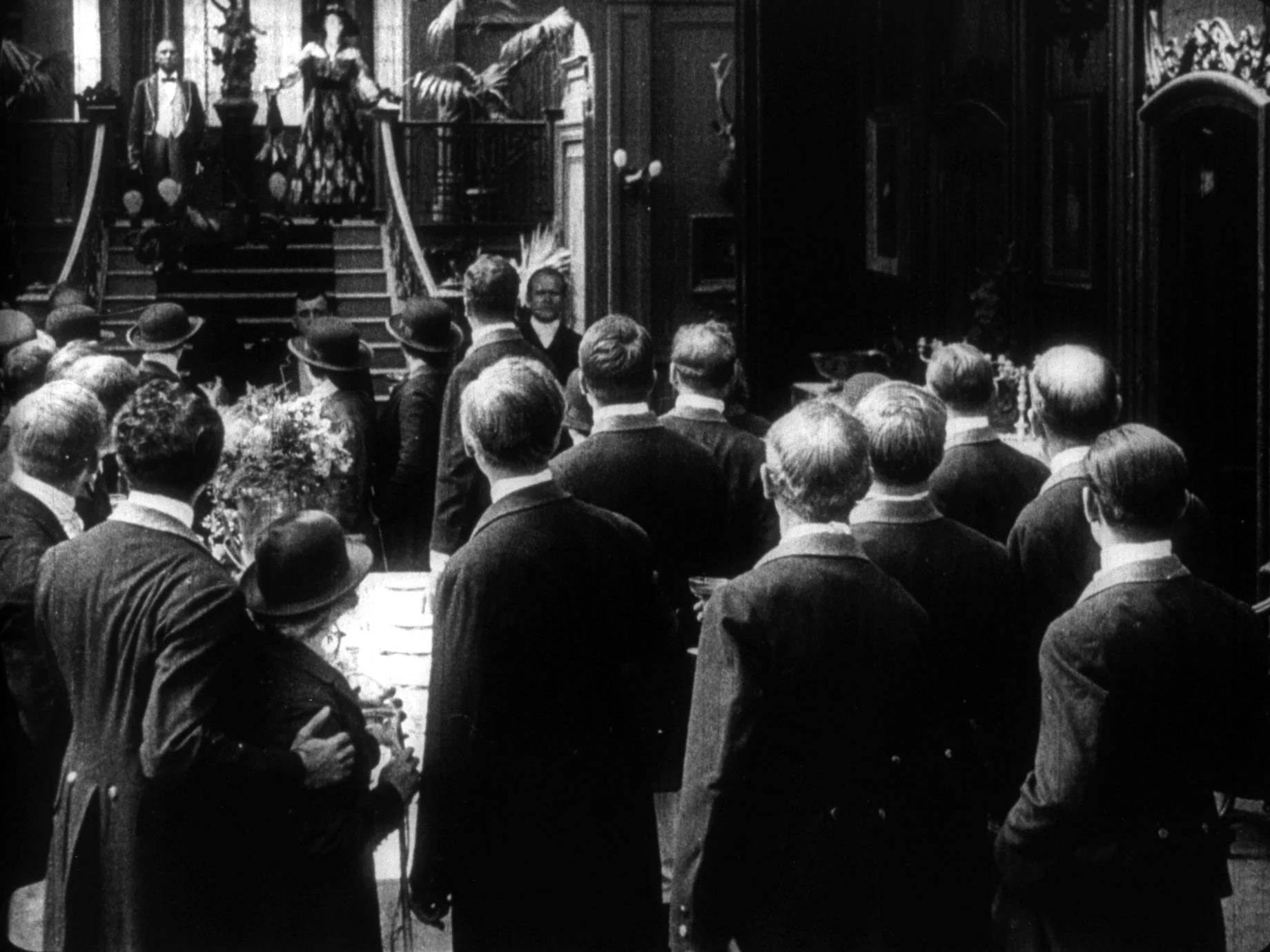
Klovnen [The Clown] (Anders Wilhelm Sandberg, Denmark, 1917).
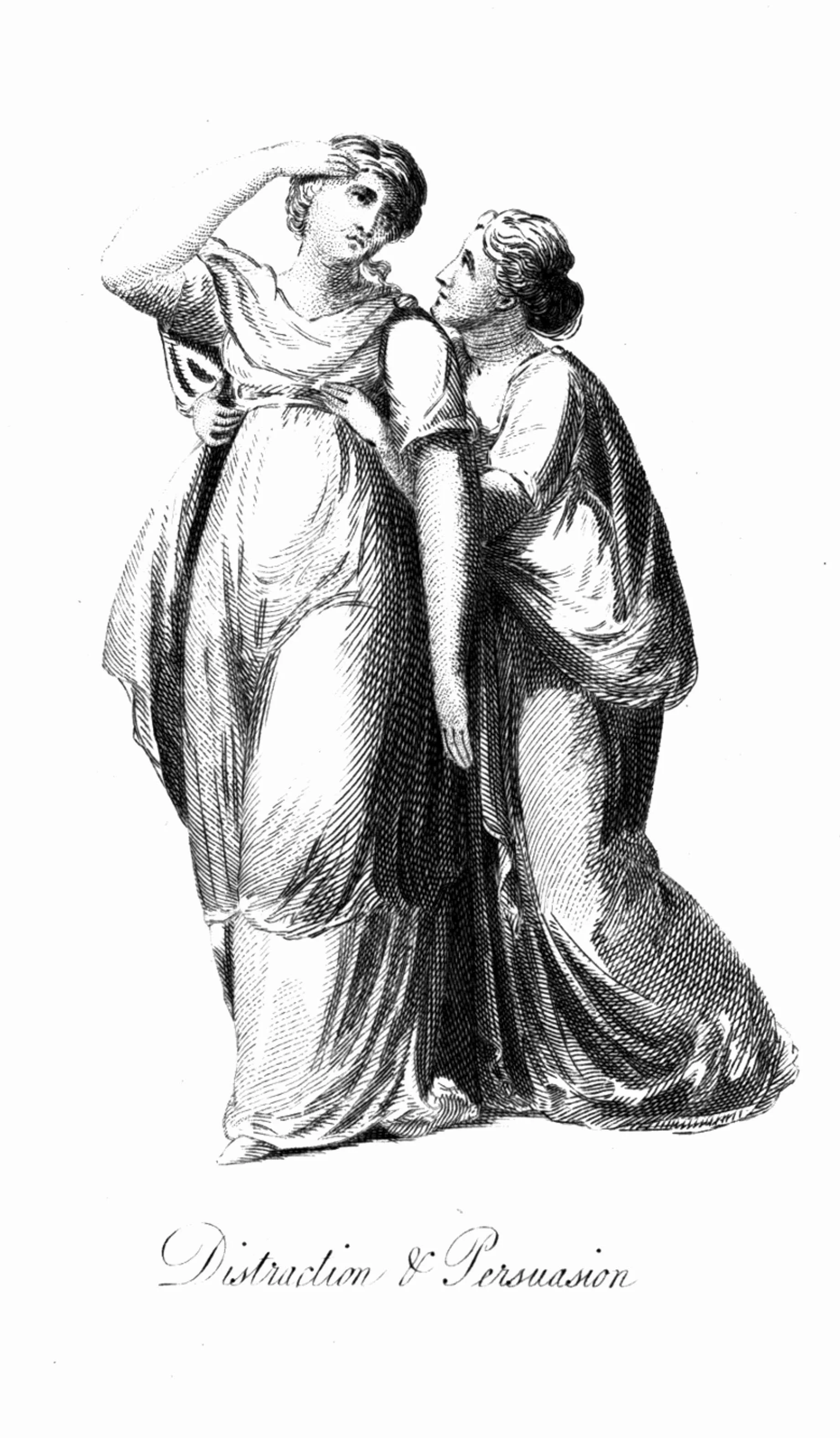
Line drawing of a scene from Alceste, “Distraction and Persuasion,” from Henry Siddons, Practical Illustrations of Rhetorical Gesture and Action, 1807.
Our book attempts to redress this balance through the analysis of aspects of mise-en-scène in the early feature film—acting, staging, and the cinematic equivalents of the nineteenth-century tableau or “stage picture.” Indeed, we propose to situate the cinema of the 1910s in terms of theatrical traditions which largely derive from the previous century. To appreciate the film acting of a Lyda Borelli, or the very different acting of a Victor Sjöström, we believe it is necessary to understand the acting in the theatre in which they were trained, and which their original film audiences knew. The pictorial vocation of nineteenth-century theatre encompassed an approach to acting which emphasized the assumption of expressive and graceful attitudes or poses, often learned through the study of painting and sculpture and sometimes canonized in performance tradition. It also encompassed an approach to staging which sought to maximize the spectacular arrangement of decor and the acting ensemble to create striking pictures at key dramatic junctures.
The feature film of the 1910s provided a fertile terrain for the survival of the pictorialist theatrical tradition. Filmmakers turned to this tradition as they sought to tell longer and more complex narratives without the benefit of spoken language, and as the requirements of staging for the camera provided a whole raft of new opportunities for generating striking arrangements of mise-en-scène. We argue that an understanding of the influence of pictorial theatre is particularly important for an appreciation of the relatively slow-cut feature films of Europe as opposed to the editing-based cinema of the Americans and especially of D. W. Griffith, certainly the filmmaker with the fastest cutting in the world in the 1910s, and too often taken as indicative of the period as a whole.
Films examined include Mario Caserini’s Ma l’amor mio non muore [Love Everlasting], 1913; Maurice Tourneur’s Alias Jimmy Valentine, 1915 and The Whip, 1917; Victor Sjöström’s Ingmarssönerna [Sons of Ingmar], 1919; and various adaptations of Uncle Tom’s Cabin.
We hope that the ready access to images made possible by our digital edition of Theatre to Cinema will make it easier to document and study the pictorial tradition that we invoke and seek to explore.
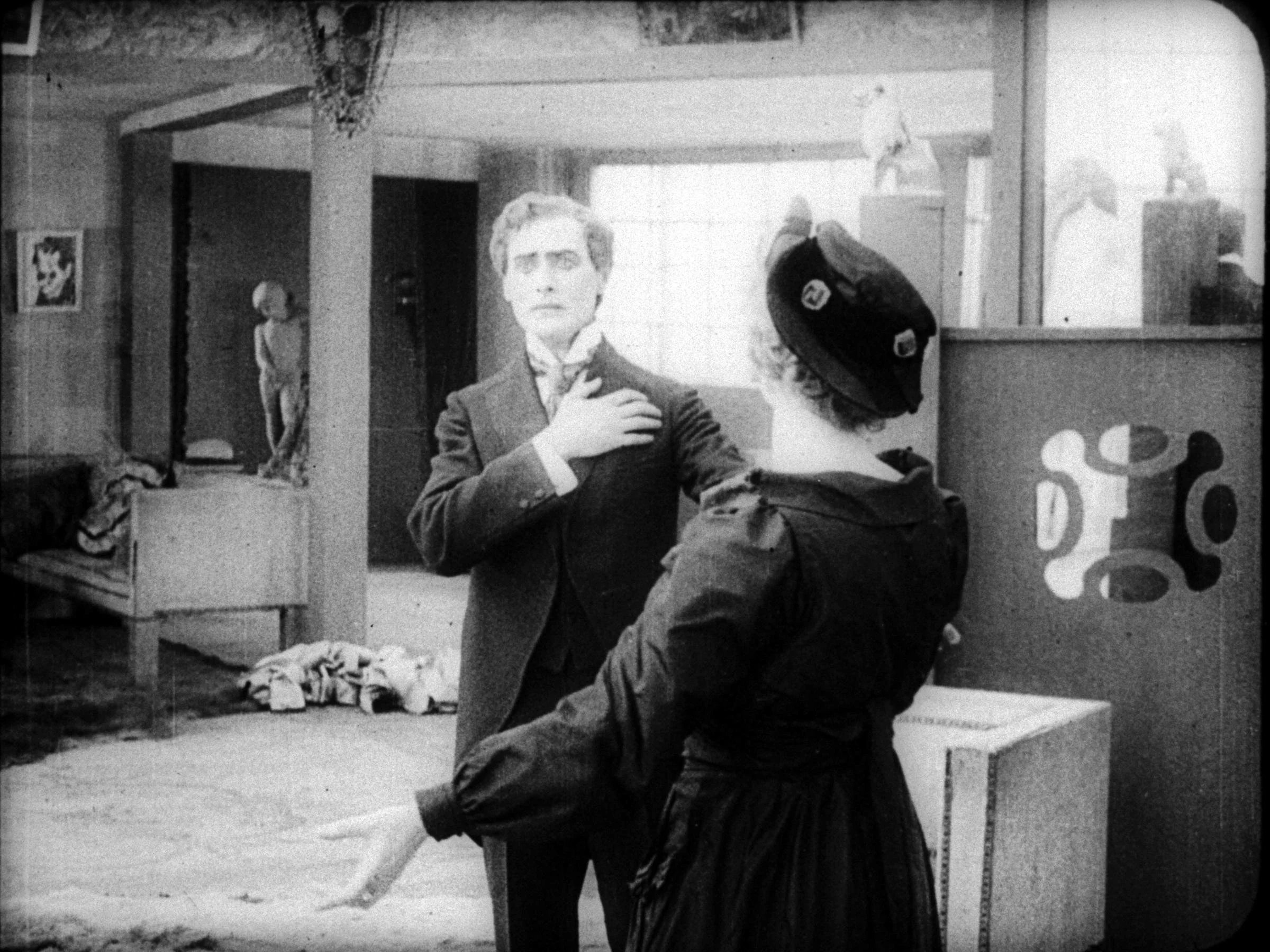
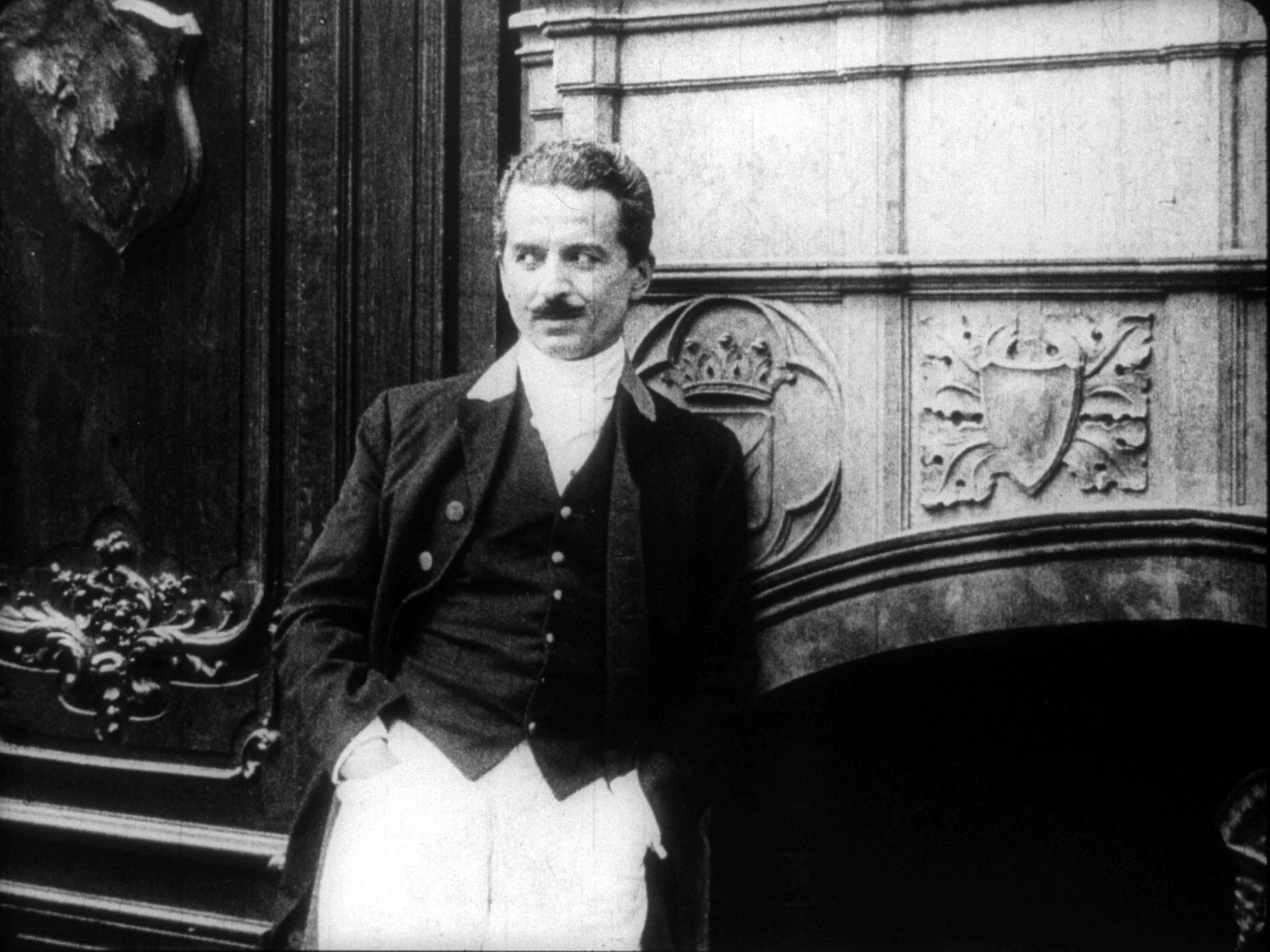
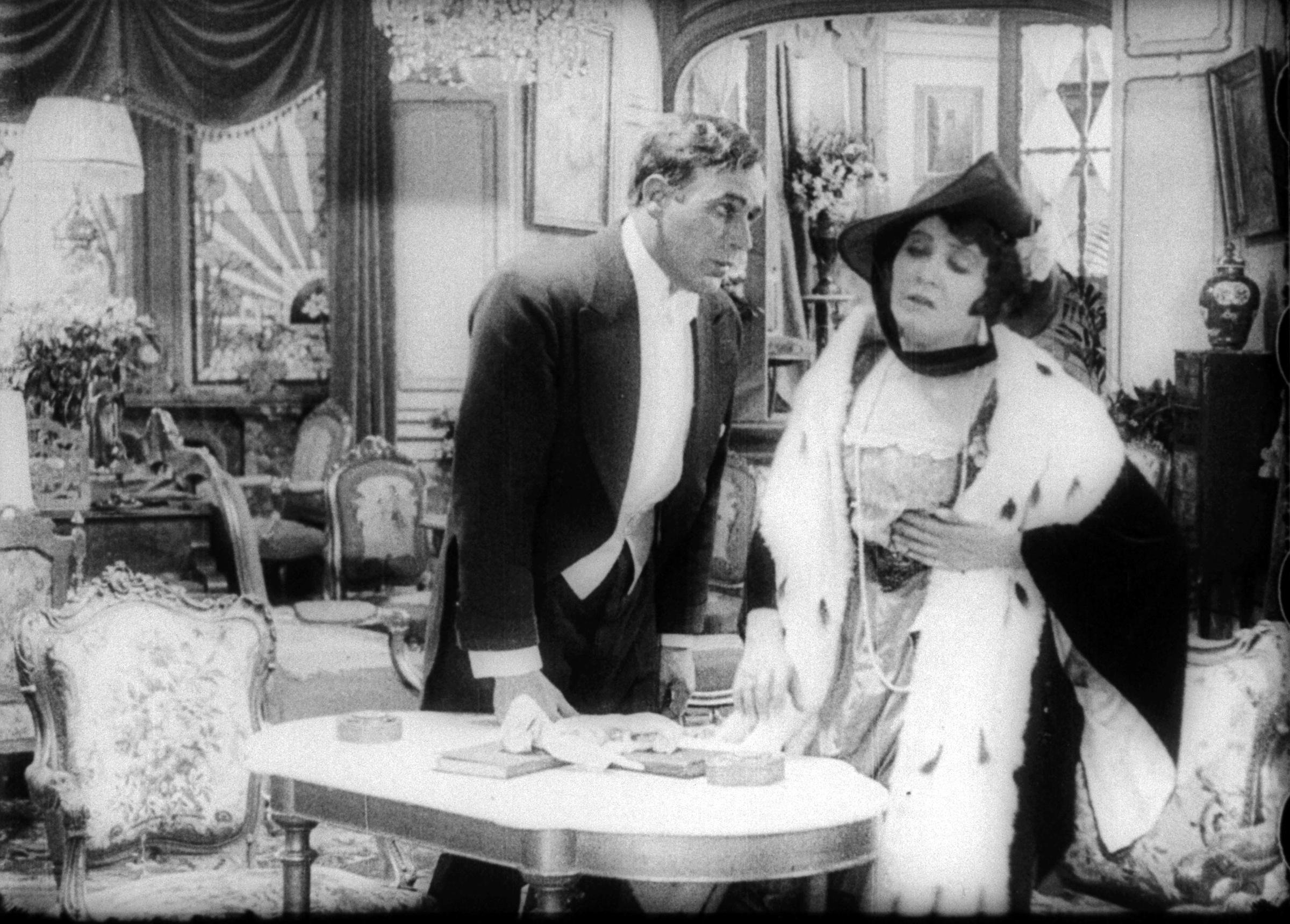
Korol’ Parizha [King of Paris] (Evgenii Bauer, Russia, 1917).
“Concentrating on issues of stage pictorialism in both media, Theatre to Cinema offers nuanced readings of 1910s features that prove cinema’s relationship to theatre was anything but a dead end….Theatre to Cinema contests the idea that films from the 1910s are best characterized by the emergence of continuity editing. It analyzes the conflicting and often contradictory ways in which film’s emphasis on pictures and situations carried over, as it were, from the theatre.”
— Eric Ames, MEDIENwissenschaft
RELATED ESSAYS
Germinal and Film Acting
Ben Brewster | Available in print as “Germinal, 1913” in Silent Features: the development of silent feature films, 1914-1934 (University of Exeter Press, 2018).
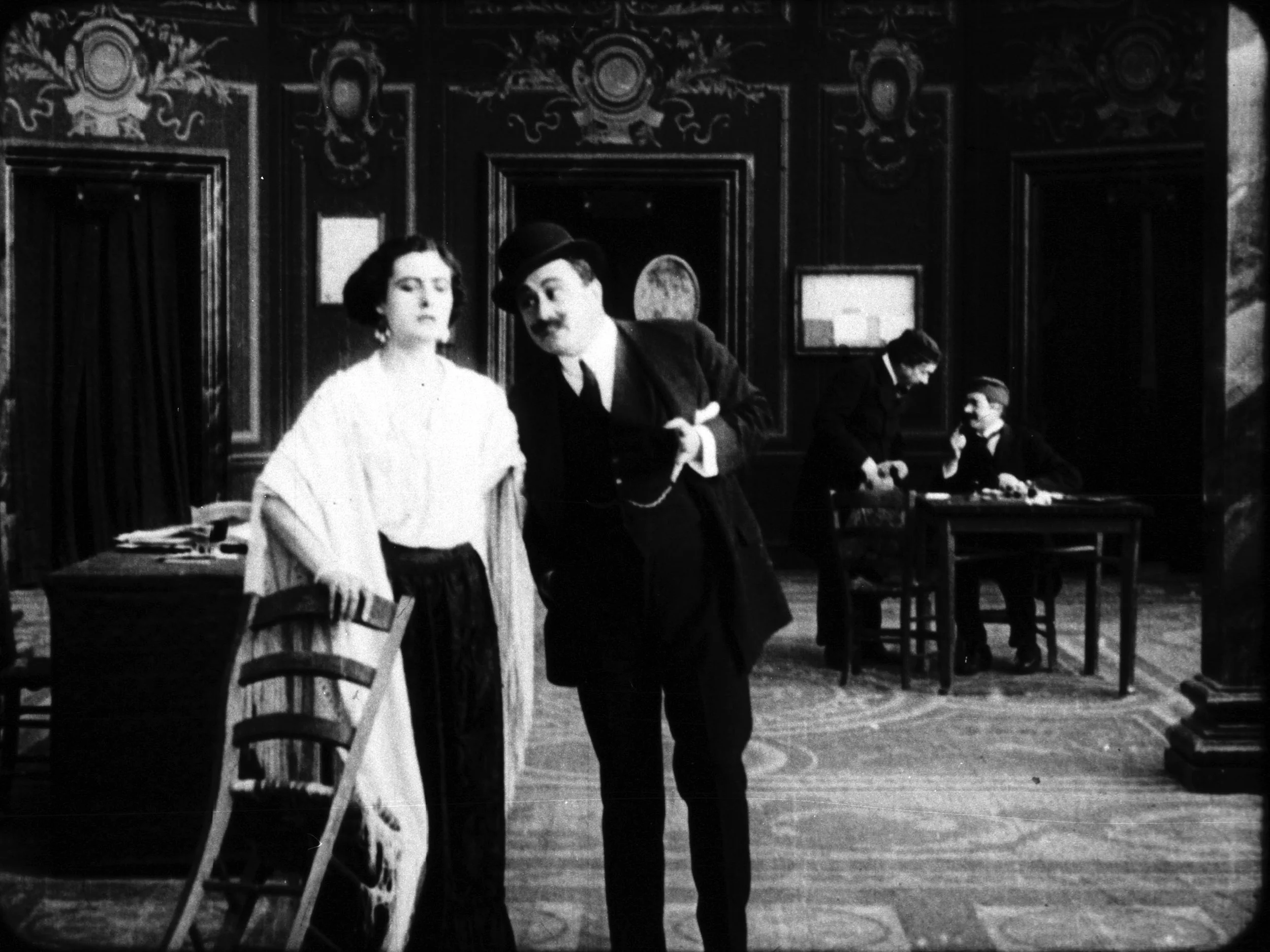
Francesca Bertini in Assunta Spina
Naturalism and the Diva: Francesca Bertini in Assunta Spina
Lea Jacobs | Available in print as “Assunta Spina (1915)” in Neale, Silent Features.
Stage and screen tableaux from The Whip
This photograph is from the 1909 production of The Whip, a Drury Lane Autum Melodrama. At the end of act 2, the villainess Mrs. D’Aquila unexpectedly enters Lord Beverley’s great house at Falconhurst and upsets the local high society assembled there. She claims to be the wife of the Earl of Brancaster at the very moment that Brancaster’s engagement to Diana, Beverley’s granddaughter, is about to be announced. Her false claim is supported through the machinations of her accomplice, Sartorys, who is also present. The final tableau is arranged D’Aquila, front and left of center in a fur stole and muff, Brancaster facing right towards Beverly, Beverley with Diana in his arms, and Sartorys, far right standing between two women with elaborate bonnets.

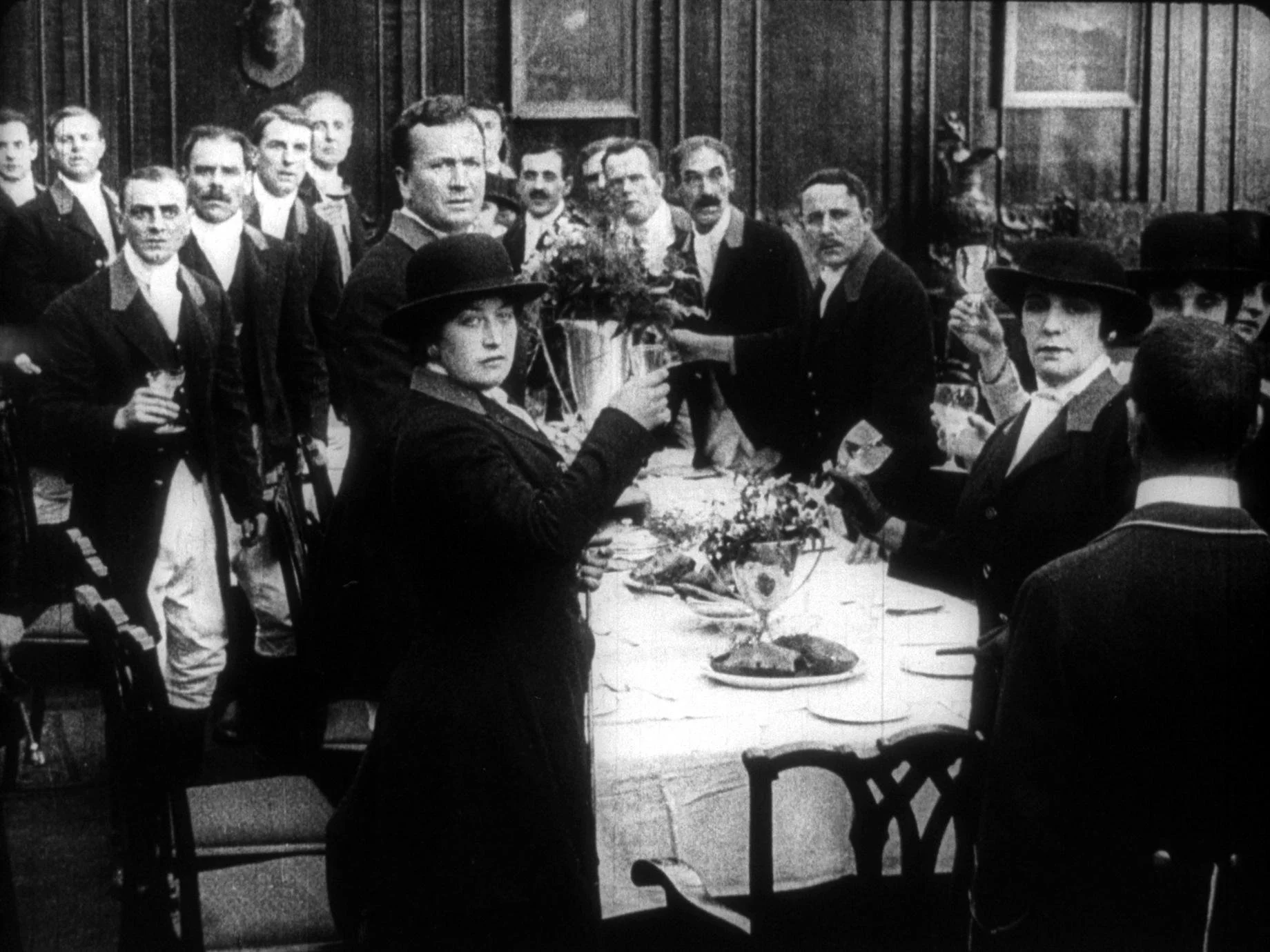
The elements brought together in this dramatic act-end stage tableau are dispersed in the 1917 film version of The Whip directed by Maurice Tourneur. The frame stills below demonstrate how Tourneur makes use of the medium’s capacity for editing to isolate the relevant dramatis personae. Note Diana in frame 3, standing in a prominent position at the head of the table looking back at the villainess shown in frame 4. In frame 5, Sartorys looks off left at Mrs. D’Aquila from a position near the fireplace. It is only after the dramatic conflict has been brought out through editing and closer framings that the director provides a unifying picture of the scene, evident in the final frame still.
Note, too, the difference between the wide and shallow playing space of the stage and the narrow but deep playing space dictated by camera optics. In the stage version above the table stretches lengthwise across the proscenium, whereas on the film set the table has been positioned so that its length extends into the background. In the final frame, Mrs. D’Aquila is therefore positioned high on the grand staircase to make her visually prominent.